
Mauricio Pochettino’s big bet: The USMNT boss has preached vibes over tactics as key to World Cup success
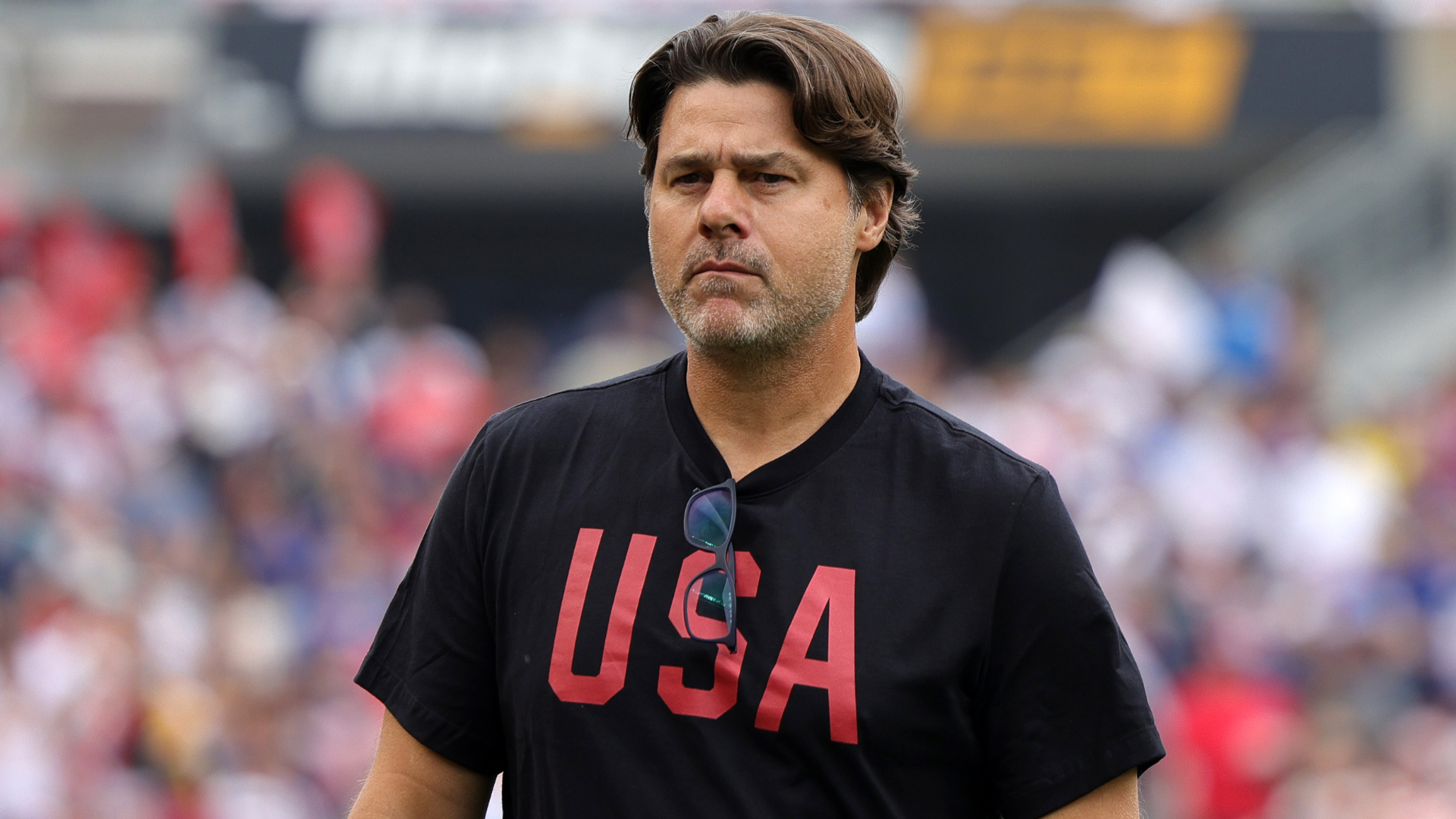
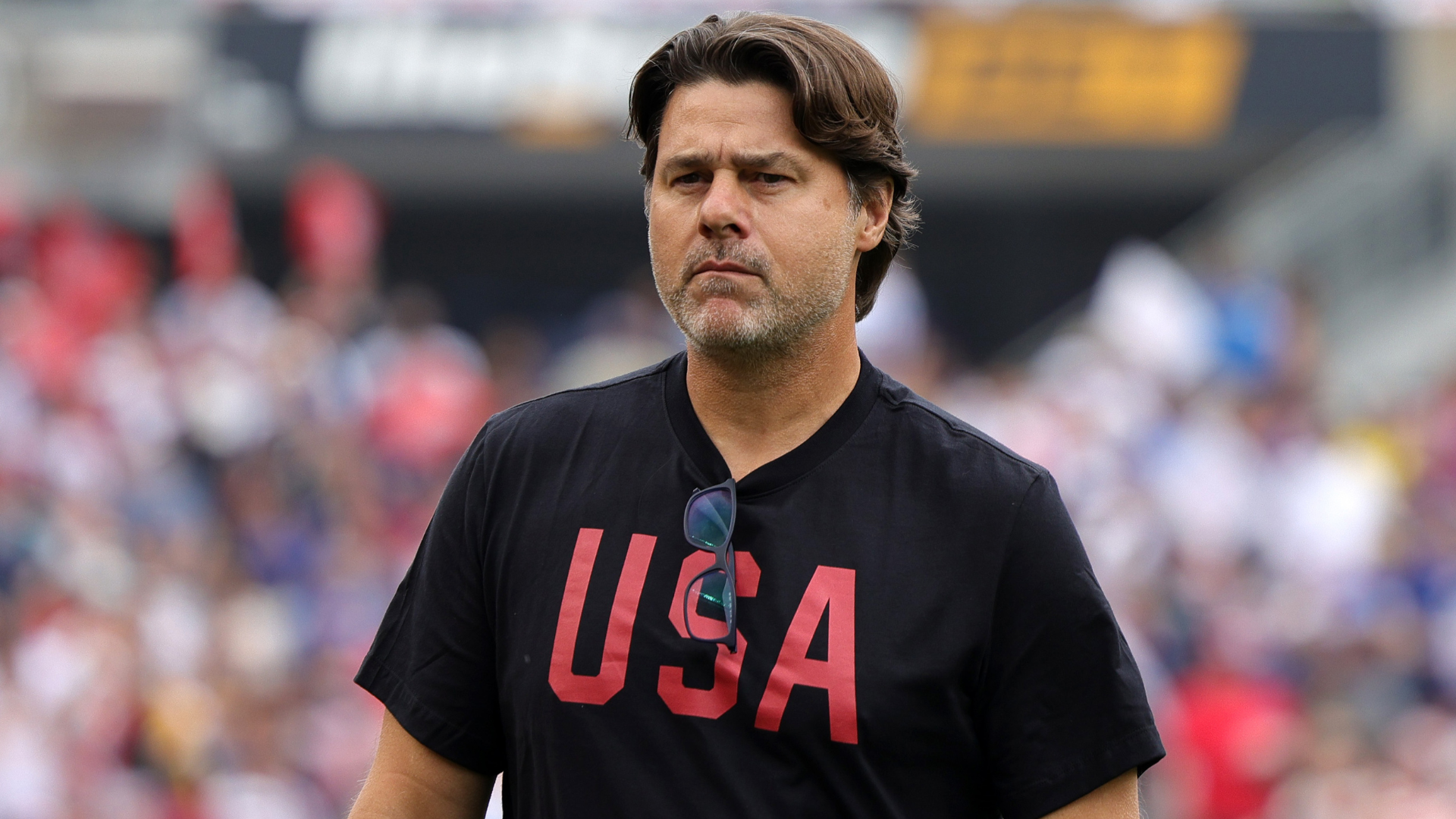
Mauricio Pochettino seemed well aware of the task in front of him as he sat in a large auditorium in midtown Manhattan nearly two years ago but was ultimately unfazed by it. The Argentina native with homes in Barcelona and London was swapping the word “football” for “soccer,” though that alone was not U.S. Soccer’s great coup. In a moment of desperation after a disastrous Copa America campaign, they had managed to convince Pochettino, with his wealth of experience in Europe’s top leagues, to steward the men’s national team at a World Cup on home soil.
The job was easy to explain – take a group of players who collectively have both the talent and opportunity their predecessors did not and help them reach their potential at a crucial juncture in their careers and the program’s history. The assignment was always going to be complicated but Pochettino spoke with an optimism as he made his opening remarks as the USMNT coach.
“I think everyone thinks that it’s no time to prepare … What I wanted to tell you is that I’m on the opposite side. I believe there’s time enough. I don’t want to put an excuse. I don’t want to create an excuse for the players to say, ‘We don’t have time to buy the new ideas, the new philosophy.’ No. Football is like this,” he said at the time with the snap of his fingers. “It’s to [find] the right button and start to perform.”
Hitting the right buttons, though, has been more arduous than many may have anticipated. Pochettino is as well-equipped as anyone to figure out what the right buttons are, the titles he won in France with Paris Saint-Germain and a run to the UEFA Champions League final with Tottenham Hotspur evidence enough. Yet, the road to the World Cup – both before and after his hire – has been defined by a series of trials and tribulations, testing the optimism of the coach, players and onlookers alike. The tournament now finally a few short days away, the hope that this version of the USMNT can actually pull off their ambitious plans is alive and well. Much of it comes down to his on-field coaching expertise but Pochettino is hesitant to let his tactics define his reinvention of the U.S. team.
Call it What You Want: A weekly podcast where Jimmy Conrad, Charlie Davies and Tony Meola cover all things USMNT and the state of the beautiful game in the United States. Catch the show YouTube live every Tuesday and Thursday at 10 a.m. ET.
Instead, he has branded himself as the vibes guy.
“Culture eats strategy for breakfast,” he said on Saturday after the USMNT’s 2-1 defeat to Germany, something U.S. Soccer donor and Chick-fil-A chairman Dan Cathy heard elsewhere and passed along to Pochettino, a refrain that has made the rounds on the coach’s Instagram account more than once in recent months.
“Here, we are not talking about the quality of the coaching staff, the strategy, the game plan, the tactics,” he continued. “It’s about culture. When your culture and your standards and your values are aligned, that is what is going to be the thing that is going to help, after, to prepare the tactics, the strategy, the game plan and everything. Without that culture, that strategy, you can be brilliant but if you don’t have the energy, you don’t have the commitment, you don’t have the trust, the confidence, all the values that are really important in that sport, it’s impossible to play well.”
The power of the underdog
Getty Images
The U.S. has yet to embrace soccer en masse but somehow, the rest of the world is transfixed by American soccer as a concept. It seems as if everyone has an opinion – good, bad, educated, completely uninformed, you name it – and Pochettino is no different. The $6 million paycheck, enabled by U.S. Soccer’s increasingly present donor class, may have helped but Pochettino and his coaching staff remain intrigued by the patchwork nature of the game in this country specifically. He has admitted that a motivation to take the USMNT job was to “try to help” with the growth of the game in the U.S., so much so that Chris Richards hypothesized that the coaching staff has probably watched tape of every American player they could find even if he was playing in Poland’s third division. The unique challenges of the American soccer landscape have been part of the intrigue.
“It’s difficult because [the players] all have different personalities, characters,” he said on day two of the U.S. team’s 17 day pre-World Cup training camp. “They build their journeys in a different way. [It] was the possibility to see people from New York, New Jersey, Los Angeles, Seattle, San Diego, Austin, Texas, Florida – all different backgrounds and you can see the difference between characters, personalities and also when you start to call players from MLS or like this, you start to see the difference of the education of soccer but it was good for us because also it’s a thing we really love. It’s a good challenge for us. We really like to help the player to reach their best level.”
Pochettino and his staff ultimately played, at the very least, a small part in a wide variety of journeys – more than 60 players were called up in the 24 games he oversaw before naming the World Cup roster, essentially starting from scratch with the player pool. The squad of his creation is a blend of two worlds. Half of the USMNT’s 2026 World Cup team took part in the 2022 World Cup, while a handful of others were in the mix to make the trek to Qatar. There is a healthy contingent, though, that seemed to come out of nowhere before cracking the tournament’s squad.
“He has this ability to find the potential [of] the young players and he is not scared to give them the responsibility to put them on the field,” Hugo Lloris, Pochettino’s goalkeeper at Tottenham, said. “in football today, I can see a lot of coaches protecting themselves and try to not take that risk and taking that time with the young players, but he’s not this kind of coach. If the young player deserve[s], he will be on the field.”
A handful of beneficiaries of Pochettino’s open-door policy are likely to start in the USMNT’s World Cup opener on Friday against Paraguay at SoFi Stadium, chief among them goalkeeper Matt Freese. He only earned his first cap a year ago but quickly unseated 2022 World Cup starter Matt Turner, Freese instantly captivated by Pochettino’s sheer belief in the cause.
“It was so inspiring for me, my first experience with a manager that’s coached in the Premier League, Champions League, the highest of the highs, for him to preach the focus and the importance of teamwork and standing up for your teammates and in chemistry on the field and have that actually be what he believes,” Freese said. “Maybe when you’re watching movies when you’re younger or you’re hearing stories, you always hear about that type of stuff but this was the first one where I actually experienced it and he’s so – I don’t know, it was very heartwarming and inspiring to understand that people of that background do actually believe in what they talk about in the movies of chemistry and teamwork matter more than anything else.”
It is the ideal messaging for a team stuck in a middle tier of soccer’s most notable national teams, one that is expected to make a healthy run into the World Cup knockouts even if the title of dark horse still feels too ambitious. Pochettino has won the favor of the USMNT’s one-time fringe players with this line of thinking, a go-to strategy of his at different points of his career – his Spurs team was once a collection of young, unproven players that eventually went on to punch above their weight as the likes of Harry Kane and Son Heung-min turned into stars. It is an ideal playbook for the U.S. team, too, but Pochettino has more than underdog examples to pull from.
“I think he changed the mentality of a lot of players in the player pool,” Malik Tillman, another beneficiary of Pochettino’s approach after years of warming the bench under Gregg Berhalter. “I think he always says, if you look at the last World Cup when Argentina won, he always says that they probably didn’t have the best team or the best players. They didn’t have the best players – obviously they had [Lionel] Messi and a lot of quality players but they were also a really close team. They were fighting for each other and this was kind of typical for South American teams and this is what he tried to bring to us as well, to bring this mentality to fight for each other, basically die for each other on the pitch and always be there for the other guy.”
Uncompromising on the non-negotiables
It helps that Pochettino himself is an underdog of sorts. He is from Murphy, a small town in the countryside of Argentina he once described as “the middle of nowhere” with a population of roughly 3,500 – the small stadium in Irvine, Calif. that will serve as the USMNT’s training base for the World Cup has room for 2,000 more.
“What I learned from there is the important values in life, the discipline,” he said ahead of the U.S.’ 3-2 win over Senegal. “Being very careful about other people, the nature, everything that is important in life. Of course, now always we are dealing with different types of things. It’s completely different to when you grow up in nature in Argentina with animals around you – horses, cows – not watching TV, no listening to radio, no reading the newspaper. I think it’s really healthy, really helpful and it’s an advantage when you grow in these types of things, that you are more transparent, you are very loyal to everyone …When you come from there, all that you achieve is massive.”
Discipline is a defining feature of Pochettino’s style as a coach, one of many in his profession who is uncompromising in his non-negotiables even if he admits the era of coach-cum-dictator is something he experienced only as a player and never attempted as a manager himself. The first example is usually on the training pitch – World Cup captain Tim Ream once described the experience as something that ended with players’ “hands on their knees, like, ‘Oh my gosh, this is a lot.'”
His sessions are always more demanding than his predecessors’, no matter the team, which is perhaps where the friction set in with the U.S. team. The first big hurdle came in March of 2025 with consecutive losses to Panama and Canada, a batch of games at SoFi Stadium that ultimately led him to question the group’s mentality, accusing them of being on autopilot. Things got a little worse before they got better – he and star Christian Pulisic had a disagreement over the players’ involvement in last summer’s games, a batch that included two friendlies before the Concacaf Gold Cup. Pulisic wanted time off after a demanding season with AC Milan but offered himself for the two pre-Gold Cup games; Pochettino said it was all or nothing and in the end, Pulisic was not included at all.
“I was disappointed with him,” he said, nearly a year removed from the incident that is fully in the past. “I am transparent. He was disappointed with our decision not to [be] included in the two friendly games.”
Pochettino’s passion is wide-ranging – for all of the inspirational speeches he offers his players, he can be unrelentingly defensive when he makes a tough call. He seems most bothered when the necessary people are not bought in and he cannot find a way to explain it, slipping in his disappointment even when he is otherwise in a good mood. Even when he insisted he had enough time to see his project through, it was hard not to notice the pressures of a looming deadline – and the stresses of details that feel imperfect in those circumstances, big and small.
“Maybe my expectation or my problem, one year and a half ago when we signed for the U.S. men’s national team, was to be excited like today,” he said on Saturday in an unspecified complaint that the urgency of the World Cup was only felt in the days leading up to it. “I’m [in a] very relaxed place because we started to live the World Cup one year and a half ago.”
A crucial 17-day build-up
Getty Images
Pochettino’s transformation of the USMNT is a tactical one first – they look markedly different than they did under his predecessor Gregg Berhalter, and distinctly like a Pochettino team. In his nearly two decades as a coach, he has always preferred an attack-minded approach and has built a U.S. team that seems willing to do the same, defense be damned. Pochettino’s ability to unlock an offensive dynamism in a team that has historically lacked that quality is to his tactical credit, a signal that his hire is justified on sporting merit alone. If there’s anything the USMNT has been since they were played off the field by the Netherlands in the round of 16 at the 2022 World Cup, it is unpredictable.
The mood has taken big swings from one direction to the other since the last World Cup, which is perhaps why the U.S. team’s journey to this summer’s tournament has to be an exercise in getting the vibes right primarily. It is almost a minor miracle that the vibes are high as they get acclimated in Southern California in the days before the World Cup begins. There was no guarantee that the friendlies against Senegal and Germany, two formidable foes, would go as well as they did – and for as much complaining as he did about the players’ mentalities a year ago at the very stadium they will open their World Cup journey at, Pochettino is generally quick to praise them for getting that fundamental right.
“I am so happy with the commitment and how the team was, thinking also that we concede in the first action and how the reaction was,” he said after the Germany game, reflecting on the fact that the team went down just two minutes into the match. “I think we need to be happy because against a team like Germany, you concede a goal in the beginning from the first action of the game and then the reaction was really positive. After we finished the first half with domination and we create chances.”
It helps that Pochettino has actually had exposure to his players for more than a few days at a time. His stint with the USMNT marks the Argentine’s first foray with a national team, a job in which teams convene for roughly 10 days at a time but do so weeks or months apart. Building consistency is a challenge for all of his counterparts but Pochettino seems to be a club coach at heart, to the point that he only initiates communication with players during international breaks out of respect to their clubs. Things only started turning around for his version of the U.S. team a year ago at the Gold Cup, when the group worked together for weeks on end, that stretch now serving as the foundation for the rest of their run to the World Cup.
For this summer’s tournament, very likely to be his finale with the U.S. team, Pochettino took advantage of every ounce of time he could get. FIFA’s rule change allowing World Cup-bound teams to open camp days before their usual June 1 start date meant Pochettino could assemble his group as soon as May 26 at the roster reveal event in New York, a 17-day camp that started at the U.S. Soccer National Training Center in Fayetteville, Ga. opening the day after. It marks a final lengthy stretch to underscore his core requirements of the team in what might just be a make-or-break stretch. The USMNT’s World Cup hopes seem overly reliant on ensuring the vibes stay as good as possible for as long as possible, tactical demands almost secondary.
“Everyone is aware of the major differences between coaching at the club level and international level, and the main difference is just time on the field and time with your players,” Emma Hayes, the U.S. women’s national team coach who has a friendly relationship with Pochettino following their overlap at Chelsea, said. “Every international coach would love to have more time with their team, but that’s not the nature of the international calendar and it’s something I know we both had to get used to and are still getting used to … I said a few times that it’s almost like we are grandparents. We get to see the players for a week or so and then we send them back to their parents, which is their clubs.”
The FIFA rule change – and Pochettino’s decision to take advantage of it – came with a unique subplot to open the USMNT’s pre-World Cup training camp. Brenden Aaronson and his now-wife Milana D’Ambra scheduled their wedding for May 29, picking the date before FIFA’s update and before Pochettino even had an offer to coach the U.S. team. He and D’Ambra were ultimately willing to push their nuptials but Pochettino ultimately gave Aaronson permission to skip a day of training to get married, creating an unforgettable memory for the player, his family and his teammates, the first exercise in many of ensuring the mood stayed positive during this final stretch before the World Cup.
“I know the type of player that he is, professional, and the good thing is that [it] was a thing to celebrate,” Pochettino said afterwards. “The teammates were very happy to send videos. The thing was [it] also helps to create a better atmosphere, to create more commitment. It’s a thing that gives energy and provides energy to the team … All the leaders need to think in this way, be more human than in the past. I think we were happy, he was happy, the family of him was happy. His wife now is happy. I think we need to live with that.”
Aaronson described the conversation with Pochettino as an easy one, a stark reminder that the coach is a well-documented people person. Lloris and his Spurs teammates used the word “aura” to describe Pochettino long before it became a social media poster’s favorite word to overuse; the coach always a compelling figure even for those who are not instantly enamored by him. Amusing stories sneak out more often than one might realize, be it about a batch of chocolate chip cookies in his thankful remarks to U.S. Soccer staff on the final day of training in Fayetteville, Ga. last week or with a trip to the rodeo last year during the Gold Cup.
“They’re very interested in American culture. First of all, we have tough trainings but then when we’re away from training, it’s time to relax and they very much understand that balance but I’ll never forget. We were in Dallas and I think we had like an off day or two off days and they went to a rodeo in Fort Worth. I remember they came home with cowboy hats,” Chris Richards said about the hat that hung in Pochettino’s office at the national training center last week and a lifestyle the coach said he would trade for soccer if life required a career change. “They were like, ‘Oh my gosh, this is amazing,’ and I think it’s stuff like that where you kind of take for granted, especially me having lived in Dallas before, lived in Texas, understanding the rodeo culture, things like that. Every city we went to, they were enamored by how many different cultures there were in every pocket that we went to so I think that was really cool.”
Months of trial and error may have been required but Pochettino may finally be pressing the right buttons, and at just the right time. Whether this is merely the start of the statement-making run the American soccer faithful dreamed up when the U.S. won the right to co-host the World Cup nine years ago is still an unknown quantity – a balance this intangible runs the risk of being untenable, even if the USMNT only have to ride the wave for a few more weeks. For the first time in a long time, though, everyone seems to be on the same page ahead of what Pochettino described as a “decisive week.”
“We were a little bit tough,” he said on Saturday, reflecting on the journey from his first press conference in New York to the final pre-World Cup game in Chicago. “We wanted to challenge them. We wanted to challenge everyone but now it’s about to be all together, to put always the interests of our federation, our soccer, our people, the fans, the country [first] and now it’s about to give our best.”


