
India Russia News: New Delhi fast-tracks urea factory in Russia amid Iran war-sparked fertiliser crisis
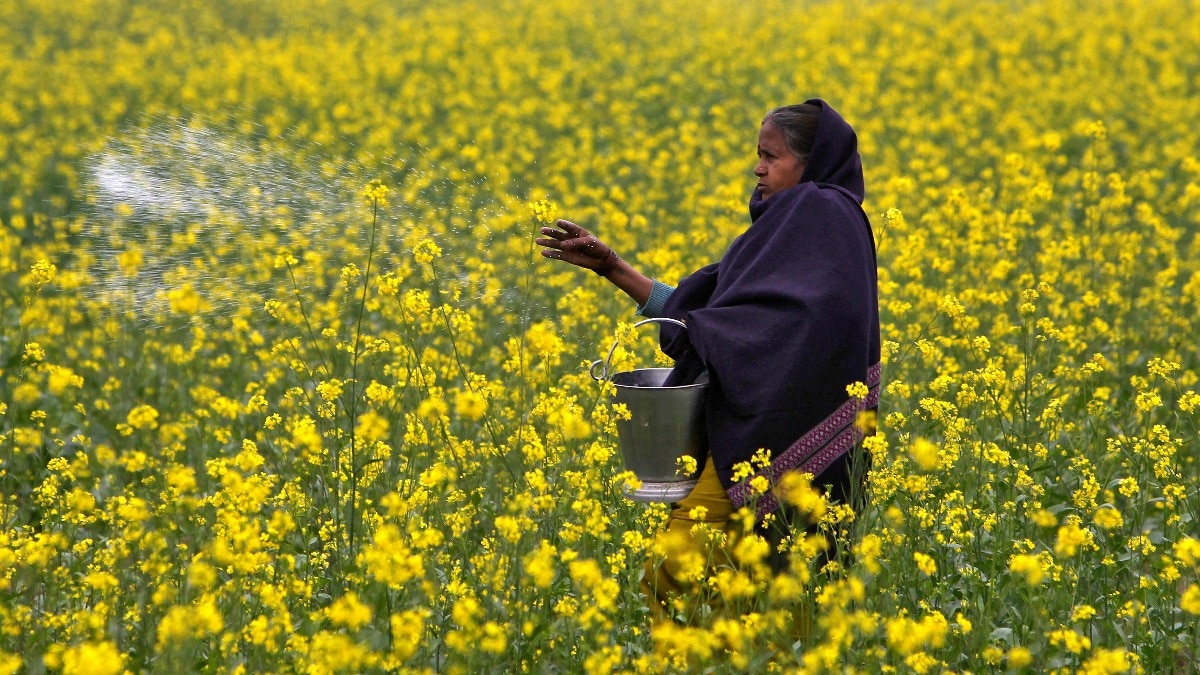
Crisis due to wars need solutions on a war-footing. That is what India seems to have done as the war in the Middle East created an acute crisis in fertilisers, especially urea. India and Russia have fast-tracked their joint-venture urea plant, which is likely to be operational in two years. The Rs 20,000-crore urea factory in Russia will help India diversify its source as India imports over 71% of the fertiliser from the Middle East.
“The urea plant will be ready within the next two years,” Indian Potash’s Managing Director, PS Gahlaut, told India Today Digital. Indian Potash is a premier entity for fertiliser imports under the Ministry of Chemicals and Fertilisers and is one of the investors in the urea plant that is likely to come up at Togliatti in Samara, Russia.
Indian agriculture is highly dependent on nitrogen-based fertiliser urea. And the war in the Middle East between the US, Israel, and Iran has created a urea shortage. India produces nearly 300 lakh metric tonnes and consumes around 400 lakh metric tonnes of urea annually. To fill the gap, India imports urea from several countries. Around 71% of the urea imports come from the Middle East. The blockade of the Strait of Hormuz by Iran and the US has disrupted the supply of Liquefied Natural Gas (LNG), leading to volatility of urea in India.
The India-Russia JV plant, with a production capacity of two million tonnes, is aimed at securing urea supply and reducing price volatility.
3 INDIAN COMPANIES INVESTING IN UREA PROJECT IN RUSSIA
Three Indian companies, Indian Potash Limited (IPL), Rashtriya Chemicals and Fertilizers Limited (RCFL), and National Fertilizers Limited (NFL), are collectively investing Rs 10,000 crore with Russia’s chemical products manufacturing company Uralchem Group, which is investing the other Rs 10,000 crores for the urea plant.
Indian Potash’s Managing Director, PS Gahlaut, told India Today Digital that, “Projects & Development India Limited (PDIL), a public sector company under the aegis of the Department of Fertilizers and the project consultant for the proposed plant, has submitted the pre-feasibility report.”
“The urea plant will be ready within the next two years,” Ghalaut said. “India’s IPL, RCF, and NFL are expected to take a call on the pre-feasibility report soon, he added.
An 11-member delegation led by PDIL, along with representatives from IPL, RCFL, and NFL, recently visited Russia. Following the visit, PDIL submitted the pre-feasibility report. “The three Indian partners will jointly study the pre-feasibility report and will take a call on the proposed project in consultation with PDIL,” Gahlaut said. The proposed urea plant will act as an assured supply source for the country, according to him.
In December 2025, when Russian President Vladimir Putin visited India, the firms of the two countries signed a memorandum of understanding (MoU) to form a joint venture for setting up a large urea manufacturing facility in Russia, aimed at securing long-term fertiliser supplies and reducing price volatility. The agreement was signed in New Delhi in the presence of Vladimir Putin and Prime Minister Narendra Modi.
HIGH DEMAND KEEPS INDIA HOOKED ON UREA IMPORTS
Indian farmers highly depend on urea for farming. The national consumption of urea was recorded at 387 lakh metric tonnes in 2025. This rate of consumption makes urea the highest-used fertiliser in the country.
India produced 306 lakh metric tonnes of urea in 2025, and there was a further need of nearly 81 lakh metric tonnes. To fill this gap, India depends on imports, coming especially from the Middle East countries. A total of $2.3 billion worth of urea was imported in 2025.
Gahlaut told India Today Digital that, “Recently, in 2026, the Indian government approved the import of 2.5 million tonnes of urea via Indian Potash Limited, bypassing the Strait of Hormuz. These 2.5 million tonnes of urea will come from countries including Russia, Algeria, Nigeria, and Oman in the price range of $935 to $959 per tonne.”
The major reason for India’s dependency on urea is the benefits this nitrogen-rich fertiliser provides to the farmers’ yield. Using nitrogen improves the vegetative growth, provides essential proteins, amino acids, and enzymes for the yield. Proper nitrogen application can boost yields by 20–50%, especially in cereals like rice, wheat, maize, and corn.
As global fertiliser supply risks persist, the Russia urea project signals India’s push to de-risk its fertiliser supply chain and reduce import dependence. If executed on time, it could offer a stable, long-term buffer against geopolitical shocks and price volatility.
– Ends
Tune In

