How Pak punched hole in Trump’s blockade by opening land routes for Iran
Donald Trump’s naval blockade in the Strait of Hormuz, with attacks on and seizures of vessels linked to Iranian ports, has significantly disrupted Iran’s trade flows, depriving the country of critical supplies and access to global markets. Now, Pakistan appears to have punched a hole in the blockade with a strategic move to open six key overland trade routes.
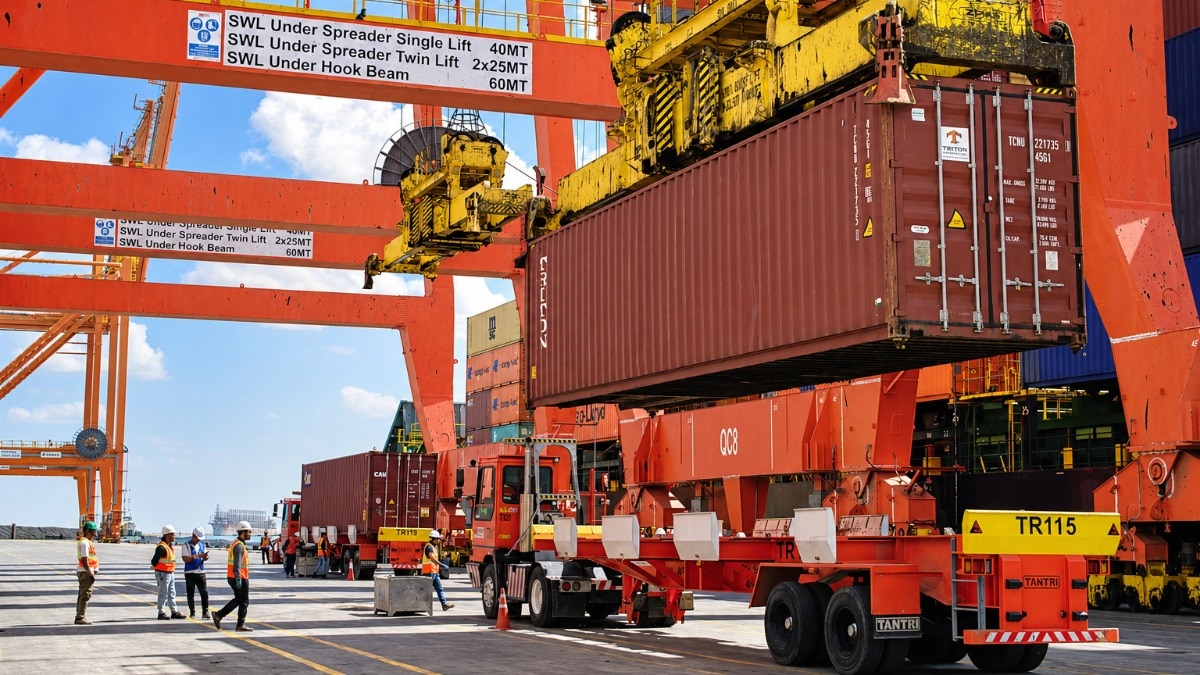
Islamabad has operationalised these routes to facilitate the movement of goods into Iran, creating an alternative trade corridor at a time when more than 3,000 containers bound for Iran have been stranded at Pakistani ports, particularly Karachi, due to escalating tensions and restrictions in the Gulf. These shipments are now being redirected via land.
The development follows a statutory regulatory order issued by Pakistan’s Ministry of Commerce, which provides a legal framework for transporting third-country goods into Iran through Pakistani territory under an encashable customs guarantee.
SIX NOTIFIED TRANSIT ROUTES
The designated corridors are:
Gwadar-Gabd
- Karachi/Port Qasim-Lyari-Ormara-Pasni-Gabd
- Karachi/Port Qasim-Khuzdar-Dalbandin-Taftan
- Gwadar-Turbat-Hoshab-Panjgur-Nagg-Besima-Khuzdar-Quetta/Lakpass-Dalbandin-Nokundi-Taftan
- Gwadar-Lyari-Khuzdar-Quetta/Lakpass-Dalbandin-Nokundi-Taftan
- Karachi/Port Qasim-Gwadar–Gabd
These routes connect major Pakistani ports, including Gwadar and Port Qasim, to border crossings such as Taftan and Gabd, enabling direct land access into Iran, with which Pakistan shares a border of over 900 km.
BLOCKADE AND ECONOMIC PRESSURE
The US naval action on the Strait of Hormuz, in place since April 13, was designed not only to curb Iranian exports but also to restrict imports, intensifying economic pressure on Tehran by disrupting key shipping lanes. Trump has claimed that “Iran is collapsing financially” and asserted that Tehran is “starving for cash” and seeking the reopening of the Strait.
Against this backdrop, Pakistan’s newly notified transit corridors are widely seen as a workaround to maritime restrictions.
Geopolitical analyst Himanshu Jain described the move as a turning point, suggesting that Pakistan has “legally punched a hole” in the US blockade even as Washington continues to tighten sanctions.
“The game just changed. Pakistan just legally smashed a hole in the US naval blockade on Iran — while Trump cancelled ceasefire talks and dropped new sanctions.
Field Marshal Munir playing both sides?,” Jain wrote on X.
The new framework allows goods originating from third countries to be transported across Pakistan into Iran, with provisions for transfer of cargo between containers or transport modes under strict customs oversight. It builds on a 2008 bilateral agreement between Pakistan and Iran on international road transport, enabling the movement of stranded cargo via trucks while ensuring financial safeguards through customs guarantees.
Analysts say Pakistan’s move is driven by both economic necessity and strategic positioning. Islamabad is seeking to boost regional trade and connectivity, while the activation of Gwadar aligns with China-backed infrastructure investments under broader regional initiatives. Alternative trade routes also help Pakistan offset disruptions in transit through Afghanistan, further strengthening its role as a regional logistics hub.
Commenting on the development, geopolitical analyst Richa Dwivedi noted that Pakistan appears to be balancing multiple interests simultaneously.
“So Pakistan is simultaneously: mediating US-Iran talks, taking Saudi money to enforce Iran-isolation, leaning on Chinese-backed corridors and opening routes that legally punch a hole in the US naval blockade. In the same week the Treasury announced new sanctions, while Field Marshal Asim Munir runs both the back-channel and the corridor that bypasses it,” she wrote on X.
While Iran has attempted to sustain trade through alternative mechanisms, the blockade has had a significant impact. Access to maritime routes remains selective, with restrictions on vessels linked to the US and its allies. In this uncertain environment, Pakistan’s land corridors have emerged as a crucial alternative, offering Iran a partial economic lifeline while reshaping trade dynamics across the region.
– Ends