UPSC at 100: From ICS to CSE- A century of change and rising women’s participation- timeline here
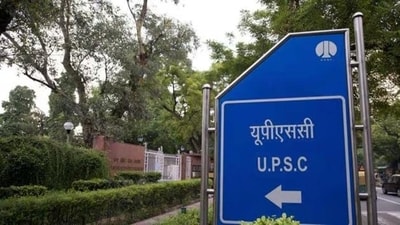
The Union Public Service Commission is set to complete 100 years on October 1, 2026. A century of work has led to changes in India’s system of recruitment to the civil services.

The roots of the civil service examination date back to 1855, when the Indian Civil Service (ICS) examination was instituted in London, replacing the East India Company’s system of nomination with open competition. The examination was conducted only in English and included subjects such as Greek and Latin, making it difficult for Indians educated outside the British system to compete.
IIT Madras & BITS Pilani collaborate for joint research and student exchange programs
The first Indian to clear the ICS exam was Satyendranath Tagore, elder brother of Rabindranath Tagore. He sailed from Calcutta to England to sit an examination, was cleared in 1863, and joined the service in 1864.
At that time, the maximum age for the examination was reduced from 23 to 19, leaving Indian candidates little time to prepare.
From London to India
In 1922, a major change came when the ICS exam was held in India for the first time, alongside the London examination. The Indian centre was initially located in Allahabad and later shifted to Delhi in 1928.
MCC NEET UG Seat Allotment Result 2026 for Round 3 releasing today at mcc.nic.in, steps to check
The first Public Service Commission was established on October 1, 1926, marking the beginning of the institution that would eventually become UPSC.
After Independence, the Federal Public Service Commission became the Union Public Service Commission on January 26, 1950, under the constitutional framework. The ICS gave way to the Indian Administrative Service (IAS). The first IAS examination after Independence was held in December 1947.
In 1948, the first batch of Indian Foreign Service officers was recruited through the combined exam.
Three-stage examination
In 1976, the D.S. Kothari Committee proposed a three-stage examination.
UPSC made a major change in 1979, when the three-stage examination structure — Preliminary Examination, Main Examination and Interview — was introduced.
The eighth schedule languages listed were formally incorporated into the Main Examination, expanding the role of Indian languages in the examination. Also, the exam centre in London was discontinued.
Adaptation of technology
In 1978, the Commission adopted computers to process the applications, answer sheets and other records. In 1989, Optical Mark Recognition (OMR) technology was introduced.
Another major shift came in 2000, when the Online Recruitment Application (ORA) system was launched. By 2010, applications for several UPSC examinations had moved fully online.
For today’s aspirants, online applications, digital information systems and technology-enabled examination processes are now a routine part of the UPSC journey.
Other changes in the Civil Services
In 2011, the Civil Services Aptitude Test (CSAT) introduced a single-window system.
The main examination was restricted, and four General Studies papers, including Ethics, Integrity and Aptitude, were introduced in 2013, along with one optional subject. In the same year, the first computer-based recruitment test was also held.
Participation of Women
The participation of women in UPSC exams has increased over the decades. In 1952, only three women were among the 83 candidates recommended for appointment. By CSE 2025, the number had risen to 299 women out of 958 recommended candidates, meaning women accounted for more than 31% of the successful candidates.
The changing numbers reflect the growing presence of women in the civil services aspirant pool and their increasing representation among successful candidates. The government noted that women made up around 20% of successful candidates about a decade ago, while their share has now crossed 30%. The CSE 2025 result also placed one woman among the top five candidates, indicating the continued presence of women among the highest-ranked successful aspirants.