Neural Dispatch: Google’s big AI pitch for India, Nothing’s essential voice and deafening silence

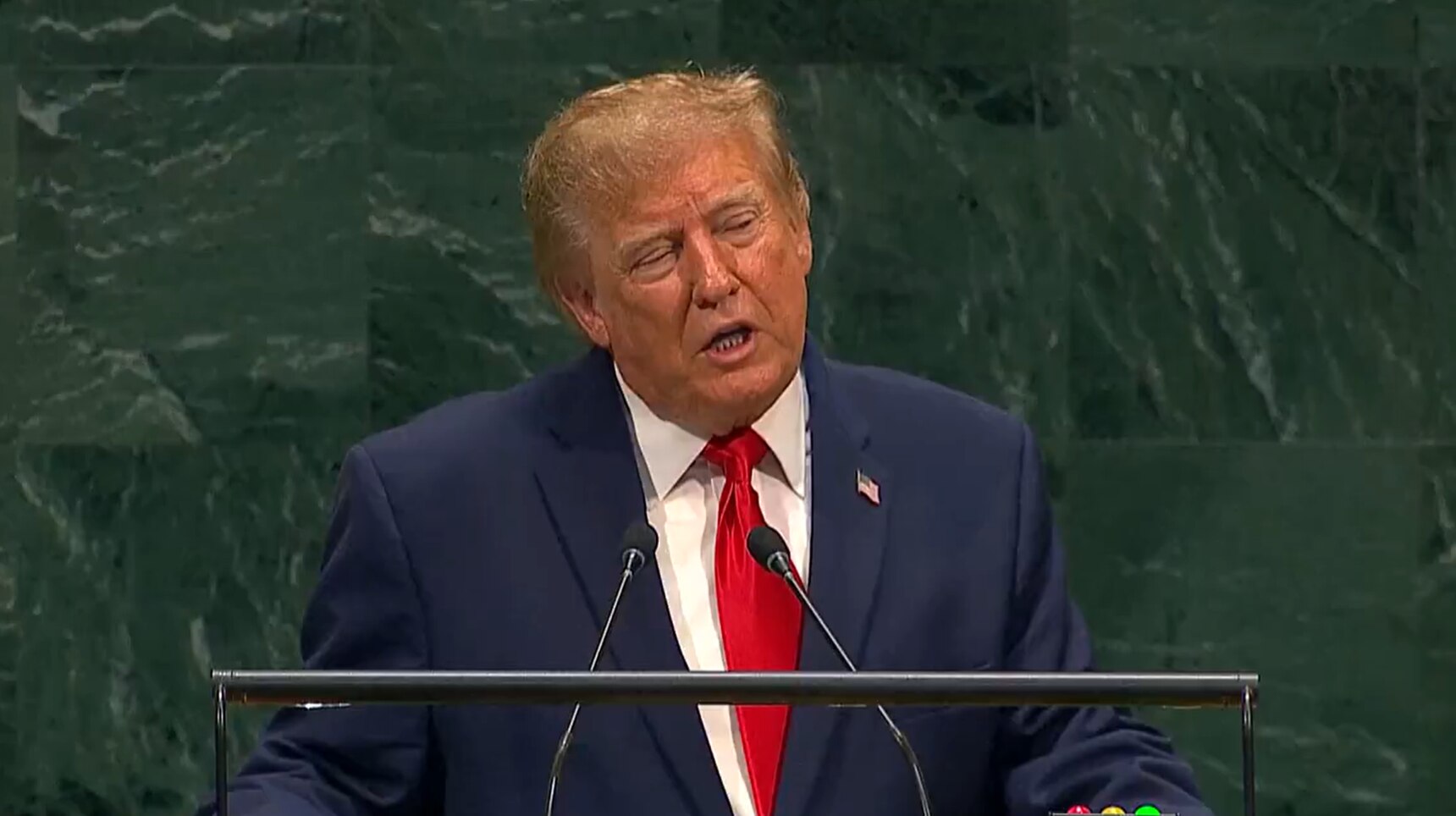
Cognitive warmup. I’ll be unwaveringly straightforward here. No Indian origin tech CEO said a word about US President Donald Trump’s “retruth” of a Truth Social post that was critical of India as a country, Indian origin immigrants in the United States and birthright citizenship abuse. I’ll not get into the politics of this from any direction, but there’s a simple observation—many Indians tend to treat Indian origin CEOs like celebrities, everything they say is gospel truth, and are the long-lost sons this nation didn’t know it needed. Here and now, a complete lack of public defence of their nation of birth. It is jarring. Mind you, the broader “diaspora” is silent too (the dollar salaries must be nice, I’d assume).

Ironically, many of these Indian-origin CEOs have never missed an opportunity to praise Trump (or any administration, for that matter). In late 2025, Sundar Pichai praised the administration’s “AI Action Plan”. Around the same time, Microsoft CEO Satya Nadella was all praise for policies strengthening American technology’s global position. IBM CEO Arvind Krishna has regularly been vocal about tech policy and global economics, including in February when he said the broader US policy wasn’t “anti-immigration”. Two things here. First, business may be greater than the nation. Secondly, toning down the exuberance (particularly when the “Indian-origin” lot comes visiting), may be prudent.
Google’s AI models aspire to deliver real impact
In my opinion, this was a key AI announcement over the last few days. Google DeepMind detailed three AI model releases—Gemma 4, Gemini 3.1 Flash-Lite and Veo 3.1 Lite—focused on helping build what they call as India’s AI ambition.
“These releases demonstrated a concerted effort towards making state-of-the-art AI programmable, scalable, and accessible to every developer, regardless of their budget or hardware, enabling them to solve uniquely local problems at a global standard of excellence.” — Manish Gupta, Senior Director, Google DeepMind
The natively multimodal Gemma 4, for instance, can be used to build customisable and offline accessible solutions for India’s education as well as agricultural sectors—key is its ability to process video and images on-device. Farmers, for instance, could get diagnosis for diseased crops by simply clicking a photo of their crop, in their local language and without any internet connectivity. Google says this is available under the Apache 2.0 licence, which means these models are open-source and free for institutions to build solutions.

Then there’s the Gemini 3.1 Flash-Lite, which Google DeepMind pitches as a cost-effective building model—cost being the highlight here, at $0.25 per million input tokens and $1.50 per million output tokens. For context, Anthropic’s mid-reasoning Claude 3.5 Haiku is priced at $0.80 and $4.00 and OpenAI’s GPT-4o is priced at $2.50 and $10 for the same amount of input-output tokens.
For a developer or a small business, these costs can add up fast. Not just app developers, but the pitch for this model is for building public services too with the specific angle of mixed-language voice commands (this understands natural Indic language).
ALSO READ ON GEMINI, AI & INDIA
Last but not least is Veo 3.1 Lite, positioned as a video-generation engine that’s easy to plug into apps built by small businesses to give a visual boost to their digital presence. Google DeepMind says programmers can plug into Veo 3.1 Lite to embed high-quality video generation directly into apps. It can “help a boutique firm to build an inventory app that turns product photos into cinematic social media ads with one click, helping small business owners reach global customers,” they say. There are specific social media-focused capabilities such as flexible framing in portrait as well as landscape modes.
Awkward genesis of Mythos
Anthropic PBC has been very bullish about the supposedly one of its kind cybersecurity capabilities of the Claude Mythos model, which is believed to be too powerful for release to general consumers (I have heard this before, and I’ve pointed this out earlier). For all that cybersecurity prowess to try and make all of the world’s apps safe and vulnerability free, Mythos’ existence was revealed to the public after a leak (so much for securing the world’s software, when the glasshouse already has a cracked wall).
Now, it is being reported that Claude Mythos has ended up with a “small group of unauthorised users”. It has also been reported that access to Mythos was gained using “commonly used internet sleuthing tools”. It is funny how something that’s supposed to be so secure, can’t even keep itself safe. Humiliating? I’ll get back to you in a moment, once this uncontrollable laughter subsides and I regain some level of composure.
Nothing to see here?
Something simpler to talk about. Smartphone maker Nothing has rolled out a tool called Essential Voice. Think of this as a dictation app that puts a speech in order in correct, polished text transcription, in more than 100 languages. That’s AI at some useful work (for a change), and genuinely relevant for many of us.
Nothing says Essential Voice will clear out filler words (such as ums and hmmm) from transcriptions. The translation agent can hear the spoken word in one language and transcribe in another, if that’s what a user requires.

Nothing says Essential Voice launches first on Phone (3) and Phone (4a) Pro, with a version for the Phone (4a) arriving soon. There are plans to add a lot more in the coming months, with contextual awareness that will allow Essential Voice to adapt writing for messages or work emails. By the way, earlier this month, Google released the Google AI Edge Eloquent live AI transcription app that also removes filler words and works offline. Surprisingly, available on iOS, iPadOS and macOS for now, but an Android version is expected soon.
Neural Dispatch is your weekly guide to the rapidly evolving landscape of AI. Want this newsletter delivered to your inbox? Subscribe here.