
US Israel Iran War: How American airman’s Iran rescue is red flag for Trump’s boots-on-ground plan
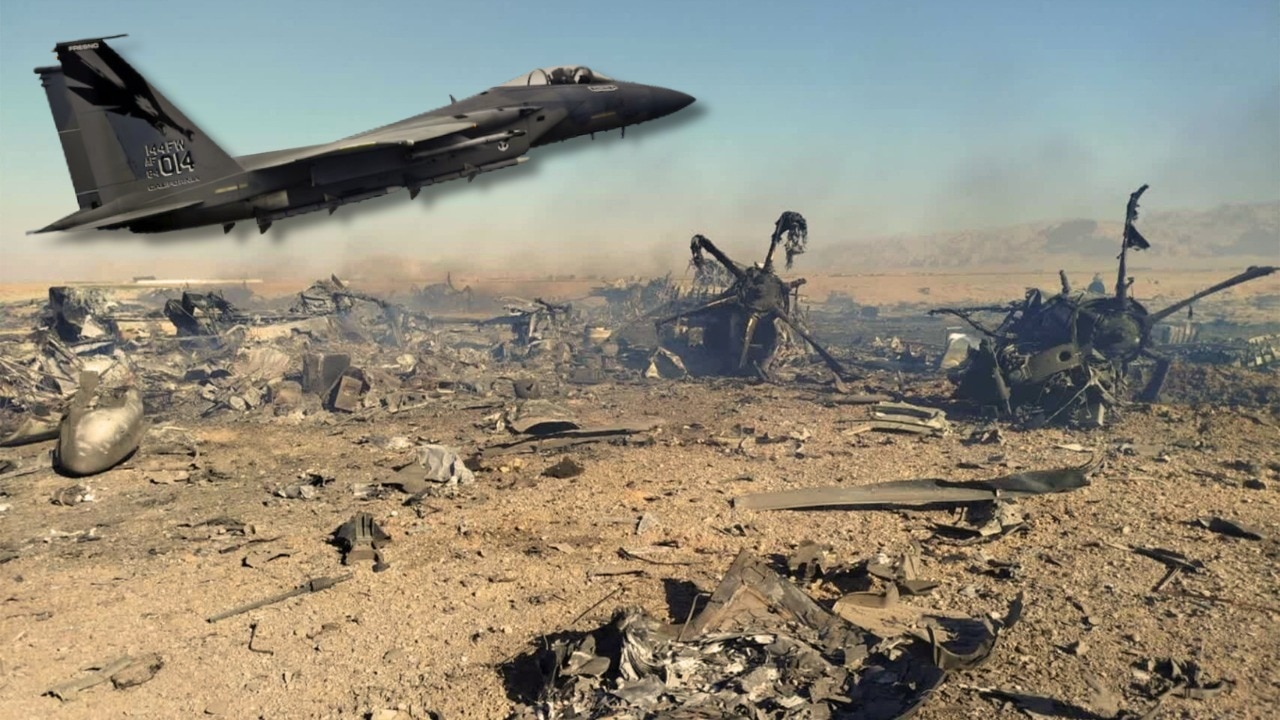
The 36-hour-long episode of an American F-15E weapons systems officer getting trapped behind enemy lines in Iran and the dramatic rescue mission to retrieve him, might end up being the biggest warning for US President Donald Trump’s boots-on-the-ground plans. The lives at stake and the hundreds of millions lost in war assets should be a red flag for any American plan for even a limited ground operation in Iran.
In an interview with The Hill on April 5, Trump was asked if he would rule out sending ground troops to Iran. “No,” replied Trump, implying a negotiation failure could lead to American troops being deployed in Iran. This reaction followed reports of Trump contemplating limited ground actions, like seizing the Kharg Island or nuclear-related sites, to pressure Iran.
On April 3, an F-15E fighter jet with two crew members was shot down over Iran by the IRGC. The pilot and the weapons systems officer (informally referred to as the gunner) bailed out but landed within enemy lines. While the pilot was rescued within hours, the hunt for the gunner involved what was a never-before-seen ground operation by the US forces.
These were tense moments. Both the Americans and the Iranians were racing against each other and against time to reach the stranded American soldier, who was of the rank of a Colonel.
Iranian troops launched a manhunt even as Iran’s regime-affiliated TV declared a bounty on the American. The wounded officer hid for nearly two days in rugged mountains. US special forces, the CIA, drones, transport planes and helicopters had to be thrown into the mission. Some of those aircraft were later allegedly blown up by the US itself on Iranian soil to stop them from falling into enemy hands. That’s the loss of billions of dollars for retrieving one soldier.
While no American soldier died, the rescue cost the US heavily. The US lost aircraft, money and military resources. That is why the rescue mission could be seen as a teaser of what could happen if Trump sends troops into Iran, more so to heavily guarded targets, like the Kharg Island.
HOW US AIRMAN GOT STRANDED INSIDE IRAN?
The drama began early on April 3, when an American F-15E Strike Eagle was shot down over Iran.
The weapons systems officer landed in a remote mountainous region and went missing for almost 48 hours. Iranian forces and local militias immediately began searching for him.
Tehran also urged locals to help find the missing American.
The stranded officer, who was seriously wounded, hid in Iran’s Zagros Mountains. For hours, he moved carefully to avoid being detected. He reportedly climbed higher ground, only switched on his emergency beacon when he felt safe, after staying silent for long stretches to avoid giving away his position, reported UK-based newspaper, The Guardian.
President Trump announced the rescue in the early hours of April 5 with a short Truth Social post saying, “WE GOT HIM!”.
American officials later described it as one of the most daring and complex rescue missions in recent military history.
WHY AMERICANS SET ABLAZE OWN PLANES IN IRAN WHILE RESCUING F-15E AIRMAN
The rescue of the US officer required a massive operation. US special forces, drones, helicopters, transport aircraft and elite units were all involved.
Reports said more than 200 US commandos took part in it. The US also used intelligence teams and CIA deception tactics to mislead Iranian forces. Fake reports were spread claiming the officer had already been rescued. False beacons were reportedly used to pull Iranian search teams away from the real location where the F-15E gunner actually was.
Special forces teams eventually reached the wounded officer in the mountains. But even after locating him, the mission had almost collapsed. Some transport aircraft and helicopters could not leave the makeshift airstrip used for the extraction. Mechanical problems, rough terrain and the risk of enemy fire made take-off too dangerous.
American commanders then allegedly made a drastic decision. It is claimed in reports that they destroyed some of their own aircraft inside Iran rather than risk sensitive equipment being captured. These claims remain disputed though.
Photos circulating online appear to show the wreckage of destroyed MC-130 transport aircraft and MH-6 Little Bird helicopters.
Independent analysts and media reports suggest that at least two transport aircraft and several helicopters were allegedly blown up after the rescue.
HOW MUCH DID F-15E AIRMAN’S RESCUE COST THE US?
The downing of the F-15E was itself a major loss. An F-15E can cost up to $100 million.
Add to that the transport aircraft, helicopters, drones, fuel, ammunition and air support used during the operation, which the American troops allegedly destroyed behind the enemy lines.
The cost runs into hundreds of millions of dollars. Some estimates suggest the broader war has already cost the US several billion dollars in damaged or lost military equipment.
While the human cost was lower, and no American troops died during the rescue mission, military experts say, the operation consumed huge amounts of resources.
Several aircraft had to be diverted from other missions. Elite units were pulled in. Drones and air cover had to remain overhead for hours.
WHY IS THIS A WARNING FOR TRUMP’S KHARG ISLAND, GROUND INVASION PLAN?
Since the commencement of the war in the Middle East on February 28, Trump has repeatedly threatened Iran, and has not ruled out more aggressive military action if Tehran refuses to back down. Just last week, Trump refused to rule out deploying US ground troops to Iran. He said he would consider it to be “necessary”, addding he would not categorically rule out putting troops in Iran.
Last week, The Wall Street Journal, citing US officials, reported that the Pentagon was preparing for weeks of ground operations in Iran.
While the potential move would fall short of a full-scale invasion, it could involve raids by a mixture of Special Operations forces and conventional infantry troops, said the officials.
Kharg Island, Iran’s biggest oil export hub, has been seen as Washington’s possible target, if Trump decided to put troops on the ground, as taking over it would hit Iran’s economy hard. There is a buzz that Trump could opt for limited ground ops directed at recovering highly enriched uranium. Such a mission that could involve hundreds or even thousands of personnel and expose them to significant danger.
Experts warn such an operation would be logistically complex, prolonged and likely to incur casualties, with no guarantee of success.
The rescue mission launched for the F-15E airman shows how dangerous even a small operation inside Iran can become.
One officer hiding in the mountains required a huge multi-agency military effort. While the terrain actually helped the US airman survive and stay hidden, a similar thing on Kharg Island would be different.
Kharg Island is flatter, more exposed and far more populated. It is also close to Iranian military positions, and ports and roads which Tehran’s IRCG guards with all its might.
If US troops get trapped there, they would not be hiding on a mountain ridge. They could end up pinned down in a refinery complex, an underground cavern in a hilly region, a town or an urban neighbourhood with heavy Iranian troop deployments nearby.
The recent US rescue mission only involved one officer. A ground operation on Kharg Island or an attempt to seize enriched uranium could involve hundreds or thousands of troops. If something goes wrong, the US would not just be losing two planes. Such a scenario, where the Iranian fire might overpower the Americans, could mean prolonged firefights, heavy casualties, damaged military hardware and billions more in lost equipment.
So the rescue of the airman might have proved that the US could operate deep inside Iran, but it also revealed how thin the margin for error really was. One wounded officer forced Washington to launch a mini-war inside a hostile territory. The mission succeeded. The officer came home alive. But the assets worth hundreds of millions, left behind in flames, might be the clearest sign of what a larger American ground war in Iran could look like.
– Ends