Retired hurt: Campbell Wilson’s mixed-bag innings at Air India draws to a close a year before end of his term | Business News

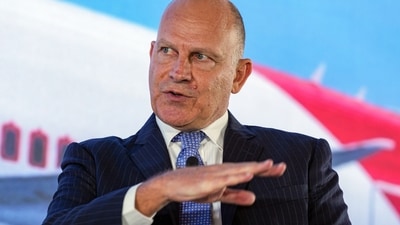
Air India’s first post-privatisation chief executive Campbell Wilson has resigned, but will stay on till his successor is found by the airline, according to sources. Wilson has helmed the Tata group airline through a turbulent period that has seen the carrier embarking upon an ambitious transformation programme to shrug off its legacy image of a rundown government-owned airline, placed world record-breaking aircraft orders, faced challenges due to post-pandemic supply chain woes, suffered a tragic plane crash that killed 260 people, faced intense regulatory heat, grappled with heavy financial losses, and continues to struggle with external headwinds like airspace closures due to geopolitical conflicts.
In May last year, before the AI 171 crash, Wilson had told The Indian Express that a transformed and new Air India should be “consistently visible” by the end of 2027, and that he was confident that the “reality of Air India will change, so will its perception”. Whenever that indeed happens, Wilson—who led Air India through the most critical phases of its transformation programme—will not be in the corner office at the Air India headquarters in Gurugram. Wilson, who has a keen interest in cricket, often said that Air India’s transformation is a test match, not a T20. And Wilson is now retired hurt.

A soft-spoken New Zealander and a Singapore Airlines veteran, Wilson took charge at a newly-privatised Air India in 2022. Before joining Air India, Wilson was the CEO of Singapore Airlines’s low-cost airline arm Scoot. His term at Air India was to end in 2027, and Wilson had earlier informed the Air India board about his inability to continue in his role as CEO beyond his current term, it is learnt. Parent Tata Sons has been scouting for a new CEO to replace Wilson for a few months now. With his resignation, a new CEO could be announced soon, industry watchers said.
Wilson’s resignation comes just weeks after IndiGo’s CEO Pieter Elbers stepped down following an unprecedented operational meltdown in December that saw thousands of the airline’s flights getting cancelled. While Air India awaits the announcement of its next CEO, IndiGo has already announced the current IATA Director General Willie Walsh as its next chief executive. With Wilson also packing his bags at Air India, the two largest airlines in teh country will soon have new leaders in the cockpit.
Wilson’s resignation also comes at a time when the war in West Asia has hit international aviation, compounding challenges for Air India. Air India’s ambitious transformation programme to turn it into a world-class airline is not complete yet, and has been hit by delays due to slow aircraft deliveries; refurbishment of the carrier’s legacy wide-body fleet is also delayed due to inadequate availability of seats and some other materials.
But most of the narrow-body fleet of the airline is now either refurbished or new, boasting of a new brand identity and a significantly better hard product than what flyers were accustomed to. The few new wide-body aircraft that Air India has pressed into service can compete with reputed global airlines in terms of passenger service and comfort.
Under Wilson’s watch, the most important parts of the transformation plan have been executed—a new brand identity is in place, group airlines have been consolidated into two—Air India and Air India Express—from four and synergies in their networks and operations has gone up considerably, massive aircraft orders are in place to ensure a steady supply of new jets over the coming years, and hiring for key operational roles is being done on a continuous basis. Air India has also deepened collaboration with its shareholder Singapore Airlines, and has entered into or deepened partnerships with various other global airlines, including the likes of Lufthansa.
Story continues below this ad
But the Air India group continues to bleed money, with Air India and its low-cost airline Air India Express reporting combined losses of over Rs 9,800 crore for 2024-25, as per government data. And this was before Pakistan closed its airspace to Indian aircraft, which has had a notable impact on the airline’s international operations, and the tragic crash of the flight AI 171 in Ahmedabad on June 12 last year. Following the crash, Air India took a safety pause, which involved additional voluntary pre-flight technical checks on aircraft and adopting a cautious approach in flight operations. Air India also curtailed its wide-body aircraft operations by 15% for a few months due to a combination of reasons that included the safety pause as well as airspace closures in the various regions.
The crash, apart from hitting Air India’s image that was being slowly rebuilt, also led to intensified regulatory scrutiny of the airline’s operational safety and culture. Air India faced numerous regulatory actions by the Directorate General of Civil Aviation (DGCA) for lapses and violations, including fines and suspension of officials. Wilson, too, was at the receiving end of DGCA’s show cause notices. On its part, the airline under Wilson was more proactive in voluntarily reporting incidents of lapses and violations to the regulator. Wilson was also the face of Air India’s efforts to regain public trust in the months that followed, the airline believes it has succeeded in that endeavour.