Tune into Vivek Venugopal’s miniature piano stories


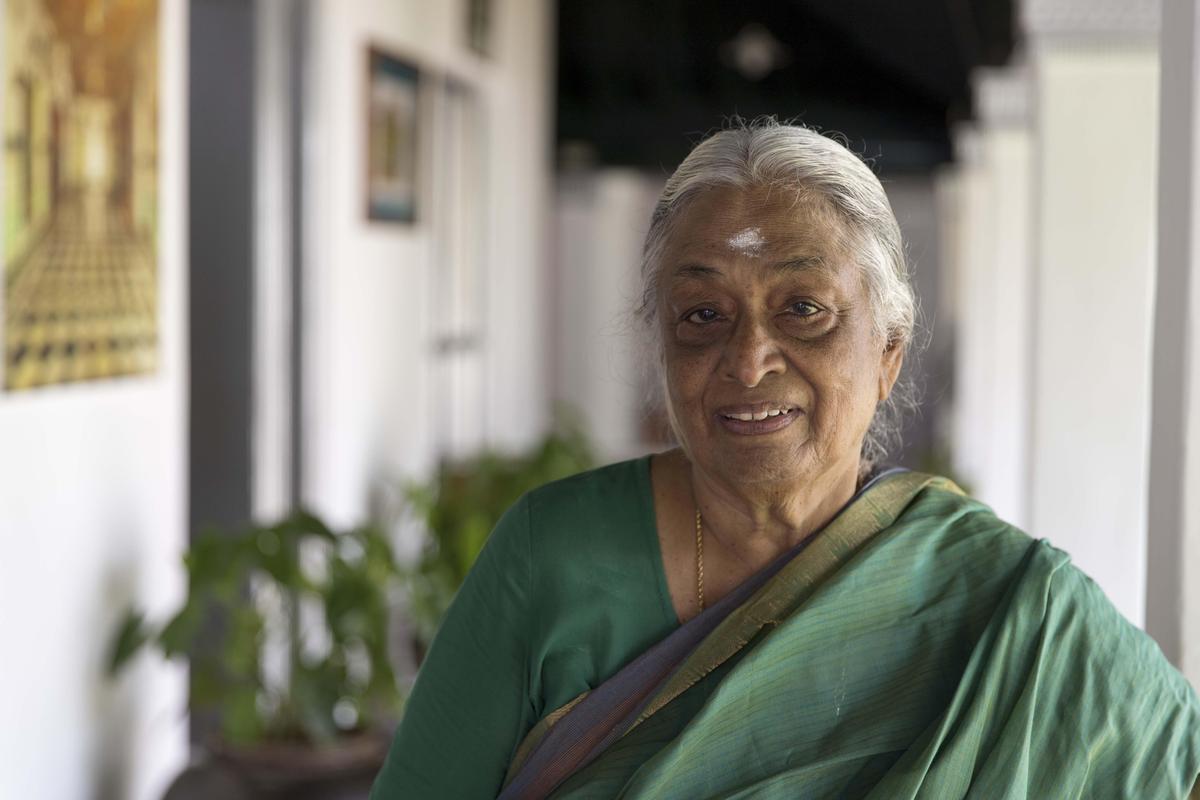
Composer Vivek Venugopal.
| Photo Credit: The Hindu
It is uncommon for a collection of piano pieces lasting less than five minutes to be perceived as a single story; rarer still for that story to conclude at a house that now stands empty. Yet Miniatures for Piano, Op. 30, which opens Vivek Venugopal’s new album, offers precisely this experience through five pieces, the shortest of which is just 28 seconds long.
What is the listener to make of a journey, where the longest segment runs to a minute-and-a-half? The pieces are marked only by numbers and have no titles to guide the listener; so one must construct the narrative; when heard in sequence, appear to unfold as stages of a single walk out and back. Vivek, a self-taught guitarist, who goes by the name Visita, places the set in the album Miniatures for Piano, Op. 30 & Op. 16, 17, alongside two longer duets for woodwind and piano — all recorded in Moscow with musicians from Bolshoi Theatre.

Vivek Venugopal and Elena Kuznetsova after the recording of Op. 30.
| Photo Credit:
Special Arrangement
The opening of the first miniature, performed by pianist Elena Kuznetsova at GDRZ (the State House of Broadcasting and Sound Recording), is similar to how Dario Marianelli opened ‘The Secret Life of Daydreams’ in the 2005 adaptation of Pride & Prejudice, with the scene evoking an English countryside landscape. The second miniature carries an ambience of a search, like running across a bare moor, and closes on a hopeful note. The third one sounds original yet uncertain, its phrases functioning as questions and answers, like a conversation with someone or something from another world. The fourth introduces a clarity, suggesting a return home.
The fifth piece imparts a gothic atmosphere to the set. At first, the return feels happy, but then the house has changed — its rooms stand empty and windows shuttered. As the piece builds, it suddenly stops, with no note left hanging. The ending is unsettling; and the set is stronger for not ending with the comfort of a final chord.

Vivek with Sergei Petrov and Nadezhda Demyanova after the recording of ‘Duo for Clarinet and Piano’, Op.16.
| Photo Credit:
Special Arrangement
Viewed the same way, the ‘Duo for Clarinet and Piano, Op. 16’, performed by clarinettist Sergei Petrov and pianist Nadezhda Demyanova, is like a house left unattended after dark. The first movement is pleasant, with the two instruments blending seamlessly, though not always; it is in the moments when they separate that the piece achieves its charm, since this allows the neglect of the old rooms to feel more strongly. The ‘Duo for Oboe and Piano, Op. 17’, featuring oboist Evgeny Roschin Ivanov and Kuznetsova, has the atmosphere of La La Land: warm on the surface and wistful beneath.
The album was recorded by Alexander Mikhlin and mixed and mastered by Vivek; it comes after Textures for Quintet, Op. 20 & An Aeolian Triptych, Op. 19. The cover design, by Naina Maithani, transitions from the orange colour of a lit window to the deep blue of a moor at night, and once you’ve listened to it, you find it difficult to look at the cover without imagining that a door somewhere in the dark is about to open.

Evgeny Ivanov, Elena Kuznetsova and Vivek after the ‘Duo for Oboe and Piano, Op. 17’ recording.
| Photo Credit:
Special Arrangement
Published – September 29, 2026 05:54 pm IST