The legislative career of Assam Congress’s Wazed Ali Choudhury | 5 facts
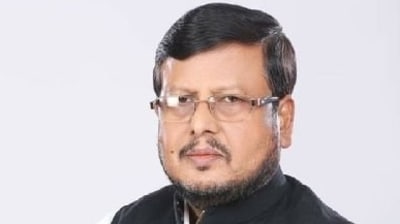
One of the key constituencies to watch out for in Assam is Birsing Jarua, where the Congress has fielded Wazed Ali Choudhury, a senior leader who has built a long-standing political base in the region.

A businessman by background, he has represented the Salmara South constituency across multiple terms and remains closely associated with local governance issues, particularly those affecting minority and riverine (char) areas in lower Assam.
In electoral terms, his career has seen both setbacks and comebacks within the same seat. He lost the Salmara South seat in 2011 to Abdur Rahman Ajmal of the All India United Democratic Front, but returned in the 2016 Assembly elections, where he defeated Ajmal by a margin of 25,954 votes to regain the constituency. This continuity of contesting from the same seat, combined with direct electoral battles against strong regional opponents, has made Salmara South a key and closely watched constituency in Assam politics.
5 key facts about Wazed Ali Choudhary
- Choudhary began his political journey in the mid-1990s with the Congress, entering the Assam Legislative Assembly from Salmara South in 1996.
- During his tenure in the government led by Tarun Gogoi, he held independent charge as a Minister, overseeing portfolios such as minority affairs and char area development, which are critical in flood-prone regions of lower Assam.
- Wazed Ali Choudhury has had a long and continuous legislative career as a representative of the Salmara South constituency in Assam, serving four terms as a Member of the Legislative Assembly. He was first elected in 1996 and went on to serve two consecutive terms until 2006, before returning again from 2009 to 2011. After a brief gap, he made a comeback in 2016 and has remained in office since
- He made a strong comeback in 2016, reclaiming Salmara South by defeating Abdur Rahman Ajmal with a margin of 25,954 votes, re-establishing his position as a key Congress leader in the constituency
- Taken together, his tenure amounts to over two decades approximately 22 years in the Assembly, reflecting both electoral resilience and sustained relevance in one of Assam’s competitive constituencies.