NHRC flags financial burden of textbooks of private publishers, seeks report| India News
The National Human Rights Commission (NHRC) has issued notices to the Union education ministry, Central Board of Secondary Education (CBSE), and all states and Union Territories (UT) over allegations that private schools are prescribing costly books from private publishers.

In response to a complaint dated April 9, the NHRC on April 15 said the issue raises concerns of “financial burden” on parents and possible denial of equitable access to education.
NHRC member Priyank Kanoongo-led bench directed chief secretaries and UT administrators to submit responses within 30 days.
The NHRC said the allegations “prima facie” indicate violations of the Right of Children to Free and Compulsory Education (RTE) Act. It cited the Act’s Section 29 and said designated academic authorities, such as National Council of Educational Research and Training (NCERT), are to lay down the curriculum and textbooks.
The NHRC said prescribing private books could impose an “additional financial burden” and undermine the Act’s mandate of free and equitable elementary education. It cited the equity goals of the National Education Policy (NEP) 2020 and said such practices may run counter to its emphasis on inclusive and affordable education.
The NHRC said prescribing multiple private publications may also violate a national policy by increasing school bag weight and posing health risks to children, potentially creating a “two-tier education system” driven by commercial interests.
The NHRC invoked its powers under the Protection of Human Rights Act and said it can “call for information or report” from governments and examine allegations of rights violations, including those affecting children’s right to education. It asked states to indicate whether directions have been issued to ensure compliance with RTE norms and to undertake school-wise audits of prescribed books within 30 days, if not already done. The NHRC sought enrolment data and details of textbooks used in the 2025–26 academic year.
The NHRC asked the education ministry to clarify within 15 days the role of authorities like NCERT in prescribing textbooks, and whether examination boards have any mandate at the elementary level.
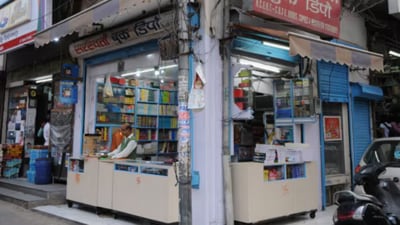
On April 15, HT reported about concerns over the rising cost of textbooks in CBSE-affiliated private schools for the 2026-27 academic session. Parents alleged they are being compelled to purchase expensive books from select vendors, often revised annually, significantly adding to their financial burden.
The issue highlights a regulatory grey area. The CBSE mandates NCERT textbooks for Classes 9-12 but only “strongly” advises their adoption for Classes 1-8. An August 2024 circular allowed schools to use supplementary materials based on their requirements. CBSE officials did not respond to queries.
Educationist MK Sridhar, who drafted the NEP 2020, said private schools are permitted to use textbooks from different publishers up to Class 8 “to avoid standardisation and to encourage creativity and innovation”.
Private institutions dominate the CBSE ecosystem, accounting for nearly three-fourths of affiliated schools, with 23,090 out of 30,415 falling in this category, according to official data.
The CBSE has not issued any fresh directive on textbook usage since August 2024. States, including Delhi, Bihar, Rajasthan, and Maharashtra, have directed schools not to compel parents to purchase books or uniforms from specific vendors. Uttar Pradesh has initiated inspections and organised book fairs to curb the sale of overpriced textbooks.
The price gap between NCERT and private publisher books is stark. A full NCERT set for Classes 1 to 8 typically costs between ₹200 and ₹700, depending on the class, whereas private publisher bundles, often including workbooks, supplementary readers, and stationery, range from ₹3,000 to ₹10,000.